
External and Internal Flank Grinding
External and Internal Flank Grinding & Precision Machining at Randers Gears
Achieve optimal performance with Randers Gears’ external and internal flank grinding. We ensure perfect surfaces and long service life for industrial gears with high precision and documented quality.
Experts in External Gear Grinding and Surface Finish
At Randers Gears we deliver high‑precision external and internal flank grinding, which is crucial for optimal performance and long service life in transmission solutions. Our advanced grinding processes guarantee flawless surfaces, minimal noise and reduced friction.
We use modern, CNC‑controlled machines to ensure accurate tooth profiles and a perfect surface finish, which is essential for increasing efficiency and service life in any gear system. Each component is thoroughly inspected to ensure the highest accuracy and quality.
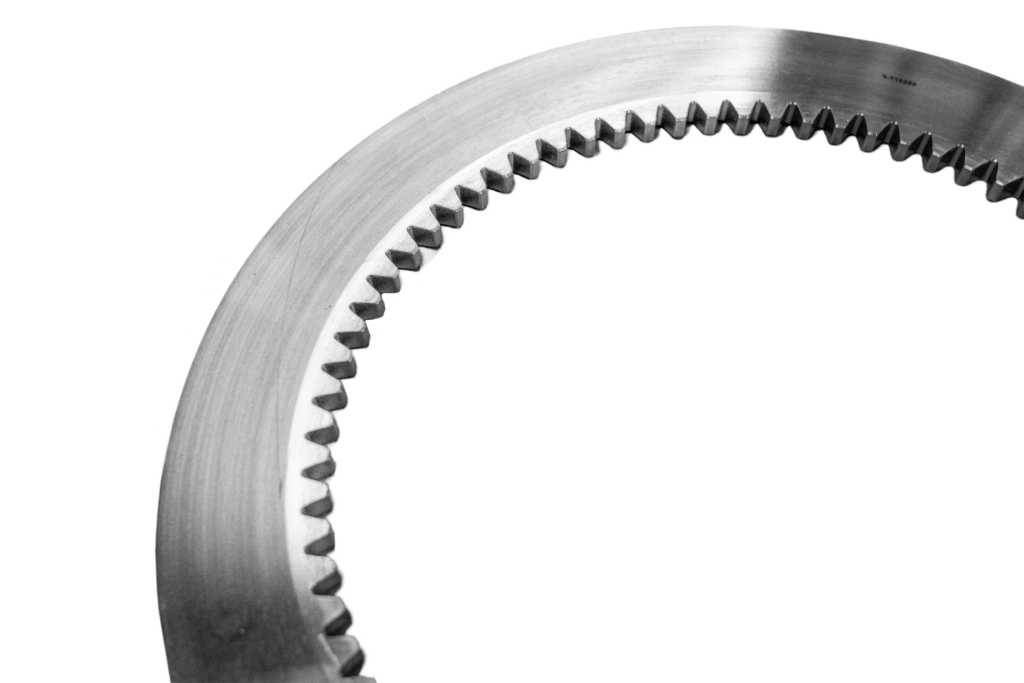
Advantages of External and Internal Flank Grinding from Randers Gears
We work with both standardized gears and complex, customized geometries. Our gear production is based on documented quality and full traceability:
- High precision and uniform tooth profile
- Smooth surface, low friction and minimal noise
- Increased service life and efficiency in gear systems
- Manufactured with advanced CNC and measuring technology
- Documented quality and full traceability
Our team of specialists ensures that your industrial gears meet the strictest requirements for precision, strength and stability, whether they are used in marine, transport, defense or heavy industry systems. With external and internal flank grinding from Randers Gears you get components that deliver optimal performance and long service life – regardless of load.
FAQ about Internal Gear Grinding
What is internal gear grinding, and how does it work?
Internal gear grinding is a precision machining process used to finish teeth located on the inside diameter of a gear or ring-shaped component. A specialized grinding tool removes small amounts of material to improve tooth geometry, dimensional accuracy and surface finish. The process is particularly useful for internal gears requiring precise engagement and reliable performance.
What is the difference between internal and external gear grinding?
Internal gear grinding finishes teeth located on the inside of a gear, while external gear grinding processes teeth on the outside diameter. Both methods improve tooth geometry, accuracy and surface quality. However, internal grinding requires specialized equipment and techniques to access and machine the internal tooth profiles.
Why is internal gear grinding important for high-precision gear systems?
What types of internal gears can be precision-ground?
How does internal gear grinding improve surface finish and gear performance?
What factors determine the achievable accuracy of internal gear grinding?
Can Randers Gears provide internal gear grinding for custom gear components?
Yes. Randers Gears offers precision internal gear grinding for customer-specific transmission components. Our specialists work with technical drawings and specifications to determine suitable machining and finishing processes. Using modern CNC technology and quality control equipment, we focus on achieving the required accuracy and surface finish.
Why choose Randers Gears for precision internal gear grinding services?
Randers Gears combines specialized gear manufacturing expertise with modern CNC grinding and measuring technology. We understand the importance of accurate tooth profiles, controlled tolerances and consistent surface quality in internal gear systems. Our manufacturing processes emphasize documented quality, traceability and reliable delivery for demanding industrial applications.